


Can Cervical Cancer Be Prevented?

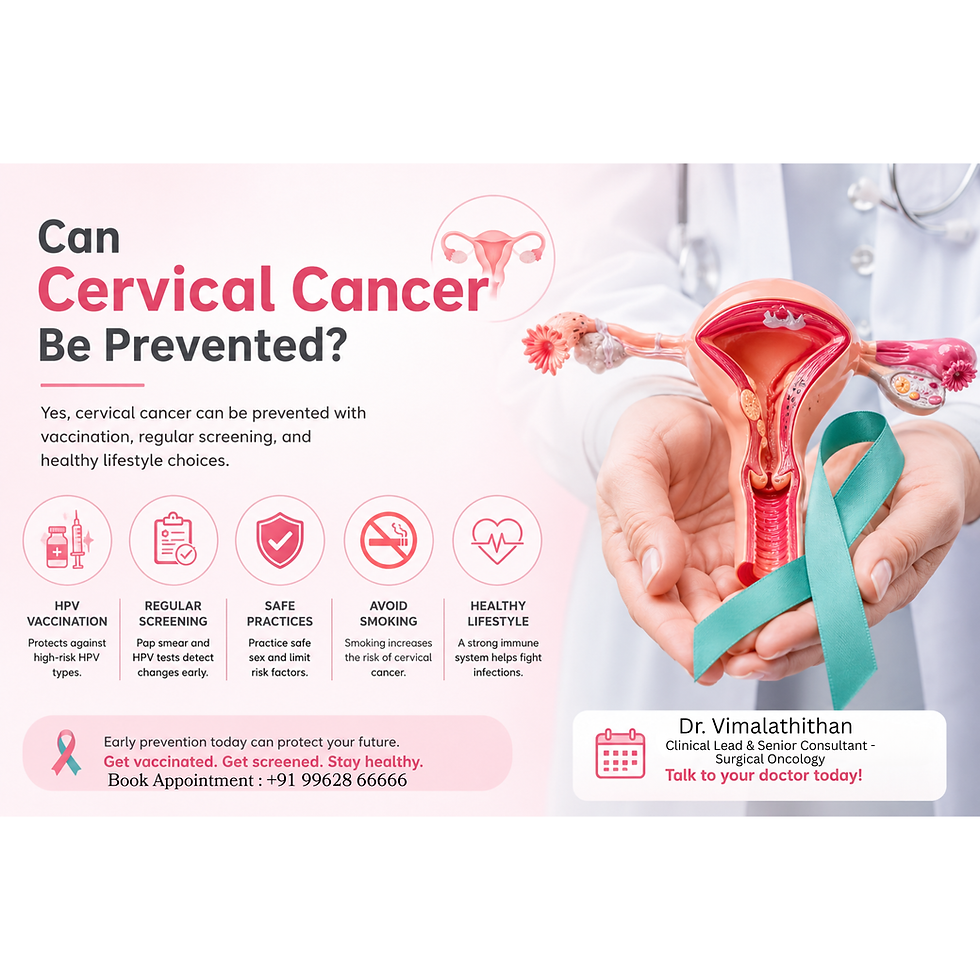
Cervical cancer is one of the few cancers that can often be prevented through vaccination, regular screening, and timely treatment of precancerous changes. With increasing awareness and access to preventive care, thousands of women can avoid developing cervical cancer altogether.
What Is Cervical Cancer?
Cervical cancer develops in the cervix, the lower part of the uterus that connects to the vagina. Most cases are caused by persistent infection with certain high-risk types of the Human Papillomavirus (HPV).
HPV is a very common virus transmitted through intimate skin-to-skin contact. While many HPV infections clear naturally, some persist and may gradually cause abnormal changes in cervical cells. If left untreated, these abnormal cells can develop into cervical cancer over several years.
Can Cervical Cancer Be Prevented?
Yes. Most cervical cancer cases can be prevented by combining three important measures:
HPV vaccination
Regular cervical cancer screening
Healthy lifestyle practices and timely medical care
These preventive steps work together to identify and stop abnormal cell changes before they become cancer.
1. HPV Vaccination – The First Line of Protection
The HPV vaccine protects against the high-risk HPV types responsible for the majority of cervical cancer cases.
Who Should Get the HPV Vaccine?
The vaccine is recommended for:
Girls aged 9–14 years (best age before exposure to HPV)
Teenagers and young adults who have not yet been vaccinated
Women up to 26 years, and in some cases up to 45 years, after consulting a healthcare professional
Even vaccinated women should continue regular cervical screening because the vaccine does not protect against every HPV type.
2. Regular Cervical Cancer Screening
Screening helps detect abnormal cervical cells before they develop into cancer.
Common screening tests include:
Pap Smear Test
A Pap smear detects abnormal cervical cells that may require monitoring or treatment.
HPV DNA Test
This test checks for high-risk HPV infection that could increase the risk of cervical cancer.
Regular screening allows doctors to identify changes early, often before symptoms appear.
3. Recognise Early Warning Signs
Early cervical cancer often causes no symptoms, making routine screening essential.
As the disease progresses, symptoms may include:
Abnormal vaginal bleeding
Bleeding after intercourse
Bleeding between menstrual periods
Bleeding after menopause
Persistent watery or foul-smelling vaginal discharge
Pelvic pain
Pain during intercourse
These symptoms do not always indicate cancer, but they should never be ignored.
Risk Factors for Cervical Cancer
Certain factors increase the risk of developing cervical cancer:
Persistent high-risk HPV infection
Early onset of sexual activity
Multiple sexual partners
Smoking
Weakened immune system
Long-term untreated HPV infection
Lack of regular cervical screening
Understanding these risk factors helps women make informed health decisions.
Healthy Habits That Reduce Your Risk
Although HPV is the primary cause, maintaining a healthy lifestyle can support overall cervical health.
Recommended habits include:
Get vaccinated against HPV
Attend regular cervical screening appointments
Avoid smoking
Maintain good genital hygiene
Practise safe sexual health
Eat a balanced diet rich in fruits and vegetables
Stay physically active
Seek medical advice if you notice unusual symptoms
If Abnormal Cells Are Found
Finding abnormal cervical cells does not mean you have cancer.
Many abnormal changes can be treated effectively before cancer develops.
Depending on the findings, treatment may include:
Close observation
Colposcopy (detailed examination of the cervix)
Removal of precancerous tissue
Minimally invasive procedures
Further evaluation when necessary
Early intervention is highly successful in preventing cervical cancer.
Why Early Detection Saves Lives
When cervical cancer is diagnosed in its early stages, treatment is generally more effective and outcomes are significantly better.
Regular screening allows doctors to identify abnormalities years before they become invasive cancer, making prevention possible rather than treatment alone.
Frequently Asked Questions
Can cervical cancer be completely prevented?
While no cancer can be prevented with absolute certainty, HPV vaccination combined with regular screening can prevent the vast majority of cervical cancer cases.
Is the HPV vaccine safe?
Yes. HPV vaccines have been extensively studied worldwide and have demonstrated an excellent safety profile.
Can vaccinated women still develop cervical cancer?
The risk is greatly reduced, but regular screening remains important because the vaccine does not cover every HPV type.
Can cervical cancer occur without HPV?
Almost all cervical cancers are linked to persistent high-risk HPV infection. Rare cases may occur through other mechanisms, but they are uncommon.
Expert Cervical Cancer Care with Dr. N.S. Vimalathithan
Dr. N.S. Vimalathithan is a Clinical Lead & Senior Consultant – Surgical Oncology with extensive expertise in the diagnosis and surgical management of gynecological cancers, including cervical cancer.
Schedule a Consultation
If you have abnormal Pap smear results, persistent symptoms, or would like guidance on cervical cancer prevention and screening, consult a surgical oncology specialist without delay.
Dr. N.S. VimalathithanClinical Lead & Senior Consultant – Surgical Oncology
📞 Appointments: 99628 66666
Take the first step towards prevention and early detection. Timely screening can save lives.


Comments